NORWAY / TROMSØ
Tromsø: Arctic fjord setting
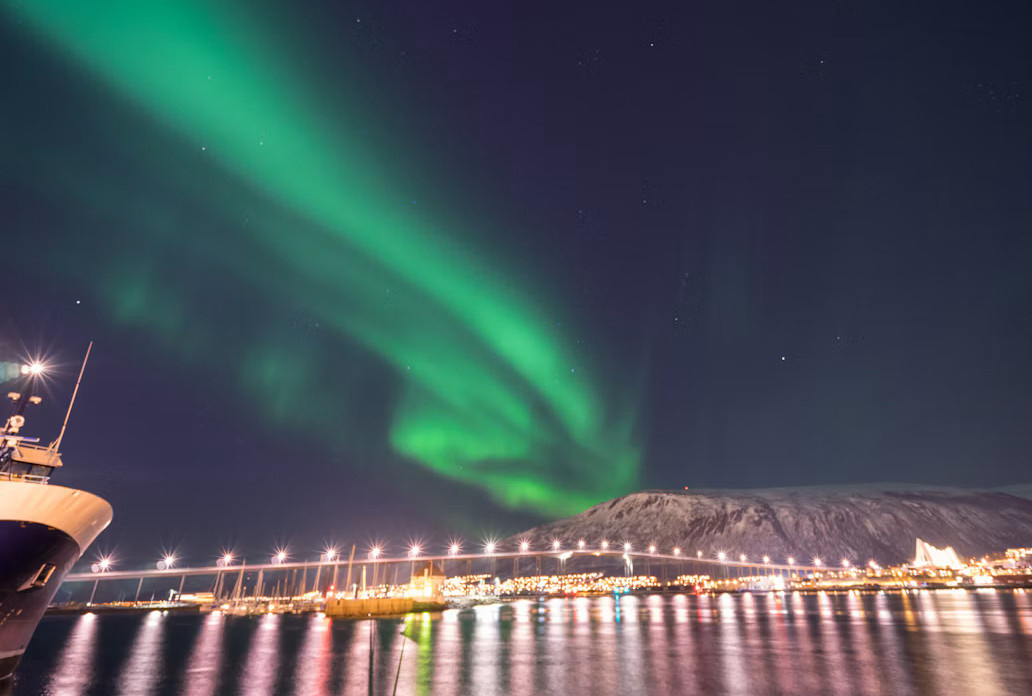
Expect snowy coastal mountains, city lights receding behind the boat and a winter maritime environment. Catamaran and traditional boat styles give you distinct comfort choices.
NORDICSKYTOURS / AURORA CRUISES
See the Arctic night from the water. Compare heated catamarans, evening sightseeing boats and yacht cruises in Tromsø and Reykjavík.
NordicSkyTours helps you choose a Northern Lights cruise that fits your trip. Learn what a boat can offer, when a land-based chase makes more sense and what to check before booking a winter departure.
Real aurora depends on darkness, cloud cover and solar activity. Sailings also depend on sea conditions. A cruise is an experience, not a guaranteed sighting.
A Northern Lights cruise can be a memorable choice even if the sky stays dark: you get an evening out on the water, coastal scenery and a different perspective on the city lights. But it is not necessarily the most effective format for searching distant gaps in cloud cover. Decide whether you want the boat experience itself or your priority is an adaptable aurora search.
Cruise listings use similar imagery even when the actual experience is different. A warm panoramic catamaran is not the same as a compact yacht, and a dinner option changes how much time you spend eating versus watching the sky. Use the vessel and inclusions as the starting point, then examine the operator’s exact departure details.
| Cruise style | Why choose it | What to check | Next step |
|---|---|---|---|
| Panoramic catamaran | Indoor lounge and wide viewing windows; outdoor decks when conditions allow | Deck access, seating, weather policy and any second-chance restrictions | View catamaran |
| Classic evening boat | Straightforward night sailing with a guide and coastal views | Total time, shelter, toilets and actual departure pier | Compare evening boat |
| Yacht cruise | Smaller-scale atmosphere and panoramic deck access on some listings | Vessel assignment, boarding steps, indoor lounge and guest capacity | Explore yacht |
| Dinner-capable sailing | A hosted evening that can include food as part of the experience | Whether dinner is included, optional or a separate ticket type | Compare dinner option |
| Motor-yacht cruise | A different Reykjavík harbor experience and on-deck vantage points | Actual boat, meeting point, cancellation and repeat-tour policy | View motor yacht |
On smaller screens, scroll horizontally to see the full comparison.
Do not confuse smaller yacht with private charter. A public yacht ticket normally means you share the boat with other passengers. Likewise, a heated cabin improves comfort but does not make the sea motionless or the clouds disappear.
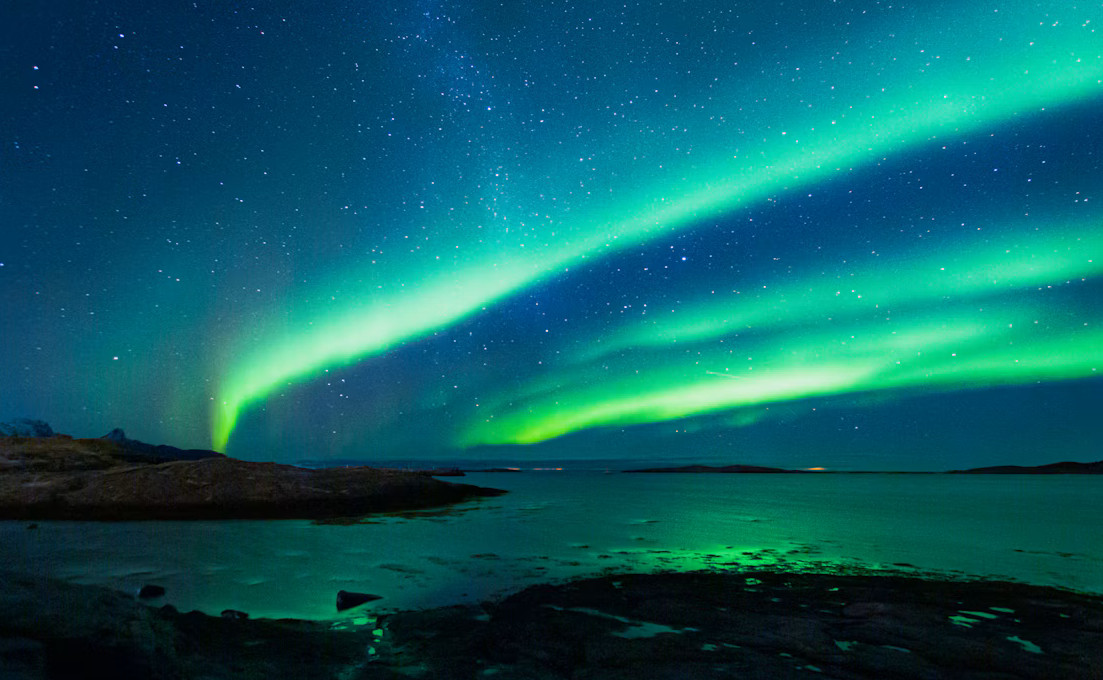
For this guide, the most useful practical comparison is between Tromsø in Northern Norway and Reykjavík in Iceland. Both have dedicated evening aurora cruise products. A tour listed for one city does not depart from the other, and a picturesque coastal image does not confirm the sailing route.
NORWAY / TROMSØ
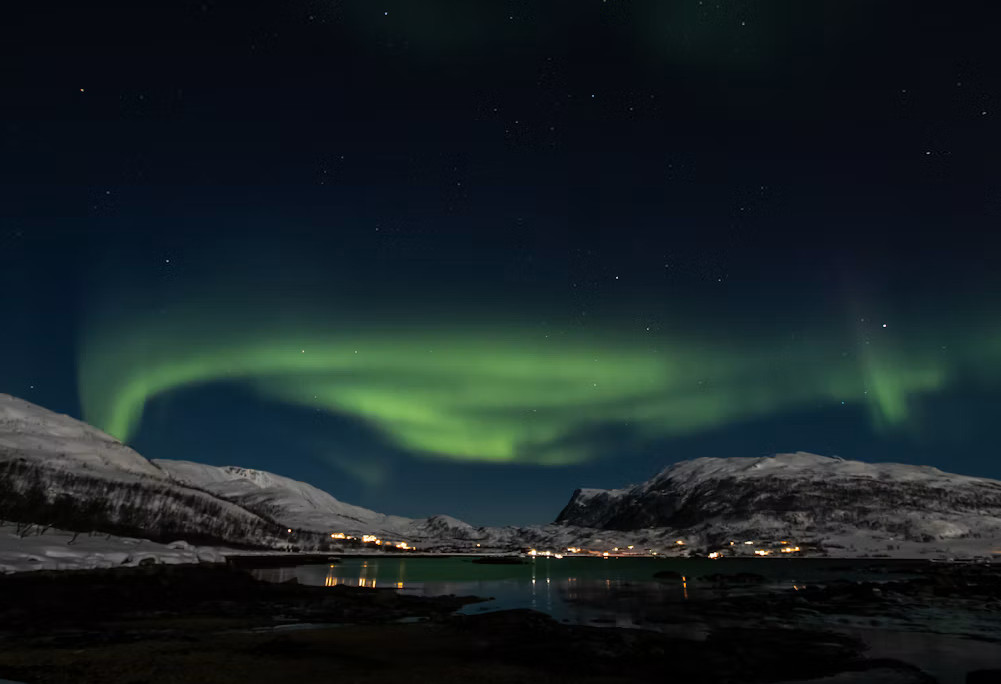
Expect snowy coastal mountains, city lights receding behind the boat and a winter maritime environment. Catamaran and traditional boat styles give you distinct comfort choices.
ICELAND / REYKJAVÍK
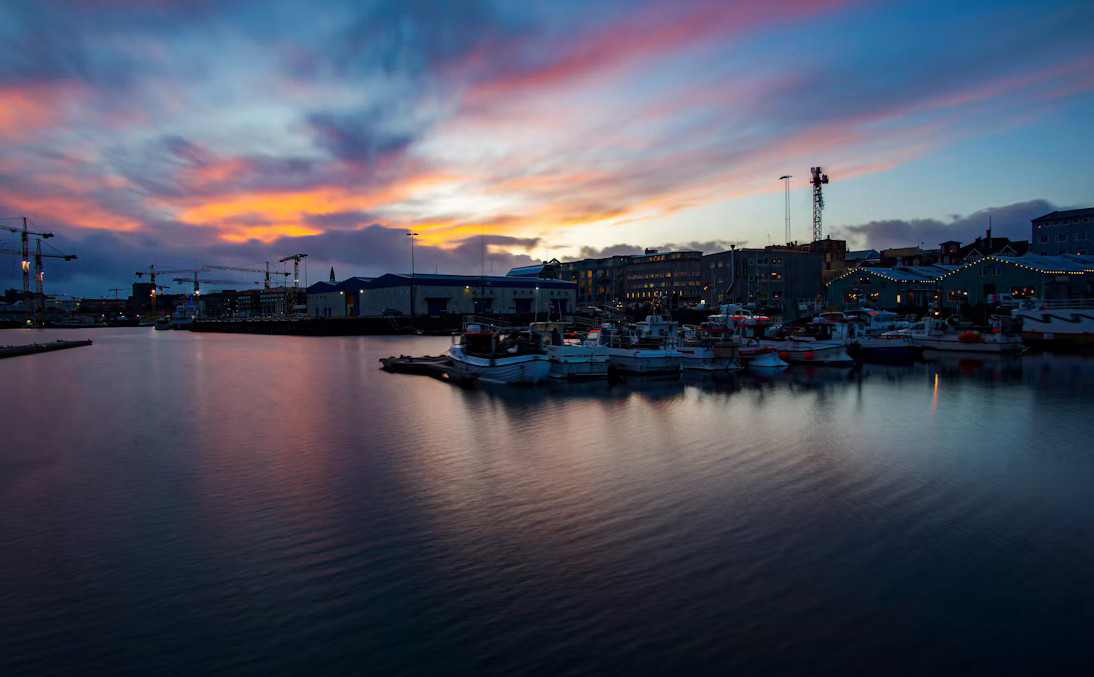
Many outings leave from the Old Harbor area and head into Faxaflói Bay or nearby coastal waters. This can be a convenient evening on a wider Iceland itinerary.
These five GYG listings cover real aurora-oriented evening sailings rather than unrelated daytime whale-watching or summer sightseeing trips. They are useful comparison choices, not a claim that one cruise is universally best. Names, departures, boat assignments, meal options and operator terms can change; verify the current listing for your date.
A heated catamaran with panoramic windows and outdoor viewing areas makes this an appealing option for visitors who want both open-air aurora watching and a comfortable place to retreat. A second-chance option is advertised, but it is conditional.
Before booking: What qualifies for a repeat cruise, whether a seat is available during your stay, the exact pier and weather cancellation rules.
A different sea-based evening with a warm interior, outdoor access and a dinner-related booking option. The experience can suit travelers who want their evening on board to be enjoyable even if the sky does not cooperate.
Before booking: Which ticket includes the meal; repeat-discount rules may differ for dinner tickets. Confirm dietary needs and boarding details.
A Reykjavík harbor yacht outing with open observation decks and an indoor lounge. It is worth considering if you want a smaller-vessel atmosphere while staying close to the capital.
Before booking: Old Harbor meeting instructions, actual yacht, number of shared guests, accessibility and any retry conditions.
A straightforward boat-based aurora evening. Compare this listing when you want a short, recognizable harbor departure rather than a vehicle-led chase across southern Iceland.
Before booking: Pickup versus meeting at the Old Harbor, included warm items, nighttime duration and the weather policy.
A motor-yacht alternative from Reykjavík with coastal views and a route described around Faxaflói Bay. This makes sense for travelers who value the sailing format as well as aurora watching.
Before booking: Exact vessel and deck layout, boarding conditions, cancellation terms and whether a repeat booking applies.
Neither sea nor land has a universal advantage. On a ship, you may get dark-water views, a warm lounge and an unusual sense of place. By road, a driver may be able to seek clearer inland conditions. The better choice depends on local cloud forecasts, your travel style and what experience you would still enjoy if the aurora does not appear.
| Decision factor | Aurora cruise | Road-based chase | What it means for you |
|---|---|---|---|
| Cloud flexibility | Restricted to feasible marine routes and safe sailing conditions | May travel to multiple road-accessible viewpoints | If chasing clear breaks is your priority, compare a mobile road tour |
| Waiting comfort | A heated lounge or cabin may offer indoor breaks | Depends on vehicle, stops and any lodge arrangements | Check actual heating, seats and access to toilets |
| Motion | Movement from waves and vessel turns | Road travel, possible long drives and winter surfaces | Choose based on your tolerance, not only photographs |
| Photography | Dark seascapes and boat-deck viewpoints; moving platform | Potentially steadier ground at stops | A tripod is not automatically useful on a moving deck |
| Weather cancellation | Marine wind, wave and visibility conditions may cancel sailing | Road safety and cloud conditions may change or cancel routes | Read the operator policy for your exact booking |
| Best reason to book | You genuinely want a nighttime boat experience | You want a guided search with more route flexibility | Pick the experience you value beyond a sighting |
On smaller screens, scroll horizontally to see the full comparison.
Prioritize your main objective, and avoid overpromising either method.
Choose sea: You are comfortable on boats, the marine forecast is suitable and your goal includes the cruise atmosphere.
Choose land: Clouds may clear farther inland and an operator describes an adaptable road route. A land chase cannot control the aurora either.
For both: Book as early in your stay as your itinerary permits if a cancellation or repeat option matters.
A good cruise description should tell you more than how beautiful the aurora could look. Focus on the actual boat and onboard arrangements: where you can sit, how often you can get outside, how the crew communicates, and what happens when conditions change.
A heated saloon or cabin can make an evening much easier in windy weather. Confirm whether everyone has indoor seating and whether the windows provide good viewing from inside.
An open deck is useful when the sky is visible, but it may be slippery, crowded or temporarily closed in rough conditions. The crew may direct guests to specific viewing areas.
Guides may explain aurora science and point out changes in the sky. Ask whether photography advice or actual guest photos are included rather than assuming every trip provides both.
Some trips include hot drinks or snacks; others offer a bar or a paid meal. “Dinner optional” means you must verify the exact ticket category, menu and dietary arrangements.
A harbor departure generally does not mean pickup at any hotel. Allow time to reach the correct pier and plan transport back after the late return.
Photographing aurora from a moving boat is different from photographing it from a fixed viewpoint. Your camera records movement from the vessel as well as changes in the light. The result can be a memorable night photograph, but sharp stars, a steady horizon and a bright aurora are not guaranteed together.
Hold the camera securely and follow the crew’s instructions. Do not balance expensive gear on railings or move into restricted deck areas for a better composition.
A long exposure can blur the horizon and stars as the boat moves. Start with available night mode or manual settings, inspect the result and adjust for motion rather than copying land-based settings.
Clean the lens carefully, protect equipment from spray and avoid shooting through brightly lit windows if reflections dominate. Do not obstruct other passengers or use intrusive flash.
A tripod is often less useful aboard a moving vessel than on solid ground; a stabilized handheld camera or phone may produce more usable results. If your main goal is a carefully composed aurora photograph, compare dedicated Northern Lights photography tours with opportunities to stop on land.
Be realistic about photographs in listings: A dramatic long-exposure marketing image may capture colors and detail differently from what you see unaided. The experience can still be rewarding without matching the photograph.
A night on Arctic water requires more preparation than a walk to a city viewpoint. Check the marine forecast and operator requirements, especially if you are sensitive to movement, traveling with children or managing mobility needs.
A cruise needs enough darkness to see aurora and suitable conditions to operate. The length of the night changes with latitude, while the ocean, clouds and aurora activity vary from evening to evening. Use these broad windows as guidance, not as a promise of operating dates.
Reykjavík and Tromsø have different latitudes and seasons. Tour availability can be shorter than the general aurora-viewing period. Use the booking calendar and the exact listing rather than assuming a cruise operates every dark night. A broader Arctic trip plan should include at least one weather-flexible night where possible.
A second-chance offer is not the same as an operator promising the Northern Lights. It may mean a conditional repeat departure, a discounted ticket or rebooking after cancellation. These are separate situations, and the detailed terms can vary between products and ticket types.
Know which one applies before paying.
Weather cancellation before sailing: The operator may cancel for unsafe sea conditions and offer a refund or alternative date according to the listing’s terms.
Boat sails, but no aurora appears: A specific product may offer a repeat ticket, subject to conditions and available space. This is not necessarily a cash refund.
Guest chooses not to sail: Normal cancellation cutoffs or change rules may apply, even if the forecast looks disappointing to you.
For example, the Tromsø catamaran listing advertises a second chance, while the Tromsø dinner-related listing describes different conditions for some repeat options. Read the current product details rather than assuming the same policy applies across both. If your cruise is booked for your last night, a future repeat ticket may have limited value.
A higher price should buy something you can actually use: comfortable seating, a particular onboard atmosphere, a meal you want, a more intimate vessel or facilities that suit your group. It cannot buy clearer clouds or stronger aurora. Compare what is included instead of assuming every “premium” label means a private experience.
REYKJAVÍK / YACHT FORMAT
A yacht experience can make sense for couples or small parties who want a particular atmosphere while departing from Reykjavík. Sharing a yacht with other guests is still a group trip.
TROMSØ / MEAL OPTION
If you would enjoy an onboard meal even without aurora, a dinner-capable departure may be more satisfying than a bare-bones cruise. But check whether dinner is a separate ticket.
A useful cost check is the total price for your actual party, including transfers, meals and optional extras. If photography is more important than comfort, a purpose-built photography tour may be a better use of the same budget. If privacy is essential, compare private Arctic experiences rather than assuming a yacht ticket guarantees exclusive use.
Use this checklist for any boat-based aurora product. A few operational details usually matter more than a long list of promotional highlights.
Confirm Tromsø or Reykjavík, the specific quay and how long it takes to arrive from your hotel. A city-name listing is not a transfer guarantee.
Compare panoramic windows, indoor seating, outdoor viewing areas, stairs, railings and passenger capacity. A substitute boat may be used.
Find the conditions for unsafe seas, forecast-related cancellations, refunds and customer-initiated changes.
Look for meal inclusions, drinks, photography service, thermal gear and whether a “premium” or dinner add-on changes your rights.
Leave room for a late return and avoid booking the cruise immediately before a very early flight or demanding morning excursion.
Consider an alternative land tour or another possible aurora night in the same city. No backup should be treated as a guaranteed sighting.
Once you have shortlisted a specific boat, open the booking listing and read the current operator information. It is more useful to compare two well-matched departures than ten tours that operate from different harbors, in different seasons or on unsuitable vessels.
These answers are general travel guidance. Actual ship facilities, booking rights, seasonal dates and accessibility requirements belong to the individual cruise listing and operator.
It is a boat excursion scheduled during dark hours with a focus on searching for or observing the aurora. The actual route, vessel, guide services and onboard facilities vary by operator.
Tromsø in Northern Norway and Reykjavík in Iceland are two established bases for evening aurora boat trips. Always confirm the exact departure city, harbor and season.
Not automatically. A cruise offers a distinctive maritime experience and may have a heated lounge. A road tour may be able to reach more inland clear-sky locations. Choose according to your main objective and the forecast.
No. Aurora depends on natural conditions, including solar activity, sufficient darkness and cloud cover. Some operators offer conditional retries or refunds, which are booking policies rather than guarantees of a natural sighting.
Many Northern Lights boat tours operate during the darker part of the year, commonly autumn through early spring. Exact operating months vary between Tromsø, Reykjavík and individual providers.
In high-latitude Arctic summer, the night sky can remain too bright for practical aurora viewing. Summer boat outings are usually better chosen for fjord scenery, wildlife and coastal travel.
A captain may adjust the marine route when conditions allow, but vessels are constrained by sea safety and navigable waters. A ship cannot necessarily reach distant clear-sky areas the way a road vehicle sometimes can.
Some are, but long evening hours, cold deck conditions and boat motion can be challenging. Check minimum ages, infant rules, indoor seating, safety arrangements and return time.
Yes. Motion can occur even on a relatively sheltered route. If you are prone to seasickness, check the vessel type and predicted sea state and seek personal advice on prevention before the trip.
Accessibility differs by vessel and pier. Boarding ramps, steps, bathrooms, seating and outdoor decks may present obstacles. Contact the operator for precise arrangements before paying.
Many listings describe a cabin or lounge, but do not assume every passenger has a seat with an unobstructed view. Check the vessel details, and still bring windproof clothing for open-deck viewing.
It depends on the ticket. Some cruises have optional dinners or onboard purchases, while others may include a hot drink. Review the actual option selected at checkout.
Yes, but the boat may move during exposure, making sharp photos harder than from solid ground. Avoid unsafe tripod placement, use a stable grip and adjust camera settings for motion.
The operator’s booking terms govern refunds or alternative departures. Sea conditions can lead to cancellation even when it is dark enough for aurora. Check the precise policy before committing.
Not necessarily. Depending on the operator, it may offer a repeat trip or another conditional arrangement rather than cash back. Check whether capacity, ticket type, season and available dates limit the offer.
Usually you should expect to make your way to a designated harbor or meeting point unless pickup is explicitly included. Confirm the address and arrival time in the booking instructions.
A good Northern Lights cruise is one you would enjoy even if the sky does not deliver a dramatic display. Start with your departure city, choose the boat and onboard comfort you want, then review the weather and booking policies for your date.
NordicSkyTours helps you evaluate the options; independent tour operators provide the cruises and set the booking terms. Aurora and sea conditions remain beyond anyone’s control.