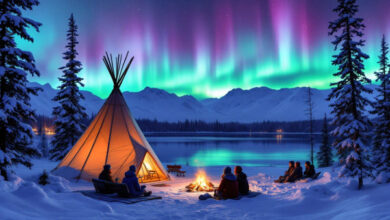
FAQ: Sweden Northern Lights & Arctic Tours 🇸🇪🌌❄️
1) What are the best Northern Lights tours in Sweden?
The most popular options are Northern Lights chase tours (guided minibus/van searching for clear skies), aurora viewing evenings at dark-sky spots, and photography-focused Northern Lights tours. Many travelers also combine aurora nights with daytime Arctic activities like winter nature experiences and snow-based adventures.
2) Where are the best places in Sweden to see the Northern Lights?
The best aurora viewing is in Northern Sweden (Swedish Lapland), where nights are long and light pollution is low. Many visitors base themselves in well-known Lapland hubs that offer frequent tours, clear dark-sky access, and easy logistics for winter travel.
3) When is the best time for Northern Lights tours in Sweden?
The best time is during aurora season when nights are dark and long. In general, that’s the colder half of the year. Your success depends most on clear skies and solar activity, so planning multiple nights usually gives you the best odds.
4) Do Sweden Northern Lights tours guarantee aurora sightings?
No—aurora is a natural phenomenon, so no tour can guarantee it. Tours improve your chances by choosing darker locations, tracking forecasts, and adjusting routes for cloud cover. The best strategy is to book 2–3 nights of aurora activities if the Northern Lights are a top goal.
5) What’s the difference between an aurora chase tour and a stationary viewing tour?
A chase tour is mobile and can drive to find clearer skies. A stationary viewing tour often focuses on a specific dark-sky location (sometimes with comfort setups like warm shelters). Choose a chase if you want maximum flexibility. Choose stationary viewing if you want a calmer, comfort-focused night.
6) What Arctic tours can you do in Sweden besides Northern Lights?
Swedish Lapland is known for winter experiences such as snow-based activities, nature outings, and cultural experiences. Many travelers build a balanced plan: one or two aurora nights plus daytime Arctic adventures, so the trip feels complete even if one night is cloudy.
7) How many nights should I plan for Northern Lights in Sweden?
For a solid chance, plan at least 2–3 nights in Northern Sweden. If you can stay 4–5 nights, your odds improve a lot and you’ll have flexibility to choose the best forecast nights for your tours.
8) What should I wear for Northern Lights tours in Sweden?
Dress very warm. Wear thermal base layers, an insulating mid-layer, and a windproof outer layer. Add insulated boots, thick socks, hat, and gloves/mittens. Northern Lights tours often involve standing outside, so warmth and wind protection are essential for comfort.
9) Are Sweden Northern Lights tours good for photography?
Yes—Swedish Lapland can be excellent for aurora photography with dark skies and wide landscapes. Photography tours often help with camera settings and technique. A tripod is strongly recommended for sharp aurora shots.
10) Are Sweden Northern Lights tours family-friendly?
Many are, but late-night timing and cold weather can be challenging for young kids. Families often do best with shorter tours, warm-up options, and comfort-focused setups. If you’re traveling with kids, look for tours that include hot drinks and warm shelters.
11) Can Northern Lights tours in Sweden be cancelled due to weather?
Occasionally, yes—extreme weather can affect road safety and visibility. More commonly, tours still run but adjust the route based on cloud cover. Always check the operator’s policy and keep a flexible plan if aurora is a major goal.
12) How do I choose the best Sweden Northern Lights & Arctic tour?
Start with your base in Swedish Lapland, then choose your style: chase tour for the best chance to find clear skies, photography tour for the best pictures, and add a daytime Arctic activity for balance. Compare group size, inclusions (thermal suits, photos, warm drinks), and duration to pick the best fit for your trip.