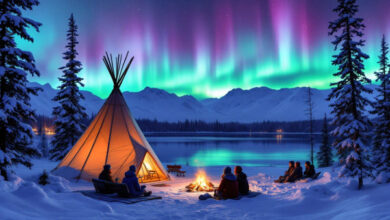
You cannot see the northern lights in Iceland during summer because the nights are too bright and the sky never gets fully dark. Even though Iceland is famous for displaying the aurora borealis, its long summer days and midnight sun make it impossible to spot the lights from June through August.

If you have your heart set on seeing the northern lights, you need to visit during the darker months. Many travelers are surprised by how light it stays in Iceland during summer, but this natural brightness is what hides the aurora until the nights grow longer again.
Knowing when to go can help you plan the best trip possible, so you don’t miss nature’s most incredible light show.
Can You See the Northern Lights in Iceland During Summer?

Seeing the aurora borealis in Iceland is about timing and light levels, not just being in the right place. While Iceland sits under the auroral oval, summer months bring special challenges for visibility.
How Daylight Hours Affect Visibility
In Iceland, the amount of sunlight changes a lot throughout the year. Summer months—May, June, and July—bring very long days and very short nights. In some places, the sun never fully sets. Because of this, the sky does not get dark enough at night.
Even though the aurora can still happen high above, you simply cannot see it when the sky stays bright all night. The best chance to view the northern lights is when there are long, dark nights. In summer, darkness lasts only a couple of hours at best, and usually not enough for the aurora to be visible.
Key facts:
- Summer months: Almost 24 hours of daylight in Iceland
- Lack of darkness: Makes aurora viewing nearly impossible
- Short twilight nights: Too much light for clear sightings
Understanding Aurora Season in Iceland
The aurora season in Iceland depends on actual nighttime hours. The northern lights can appear any time of year, but you need darkness to see the display. Aurora season here usually starts in late August and ends around late April.
From May through July, the number of dark hours is too short. Visibility of the aurora is highest in mid-winter, from September to March, when nights are longest. If you visit Iceland in summer, it is not the right season for aurora chasing, as the sun barely dips below the horizon.
Table: Iceland Aurora Visibility by Month
| Month | Nighttime | Aurora Visibility |
|---|---|---|
| May-July | Very Short (Bright) | Not Visible |
| August-April | Long (Dark) | Possible/Best |
Aurora Borealis and the Midnight Sun
During the midnight sun period, the sun remains at or just below the horizon, often through the entire night. This means the sky glows with daylight, even at midnight. The auroral oval is still active overhead, but you would not see the northern lights.
You can still experience the unique Icelandic landscape under continuous sunlight. However, if seeing the aurora borealis is your goal, summer is not the season for it. Nights are simply too bright for the human eye to spot any colors or movement from the aurora.
If northern lights viewing is important to you, plan your trip outside the summer months and during times with longer periods of darkness.
Factors Impacting Northern Lights Viewing in Summer

Seeing the Northern Lights in Iceland during summer is very difficult because daylight lasts almost 24 hours. There are several specific reasons why summer is not a good time for aurora viewing, including weather, sky conditions, and levels of darkness.
Cloud Cover and Weather Conditions
Cloud cover is a big challenge when you want to see the Northern Lights. In Iceland, summer weather often means cloudy skies, which can block your view entirely. Even if there is strong aurora activity, you will not see it if thick clouds cover the sky.
You need a clear sky to spot the Northern Lights. Sometimes, Iceland can have rain, fog, or overcast conditions, especially along the coast. Checking local weather forecasts is important to find nights when clouds are less likely.
The best chances come on nights with little to no cloud cover. If clear skies are expected, look for open areas far away from mountains or buildings that could be covered in clouds. A little planning around the weather can make a big difference, but in summer, clear dark nights are extremely rare.
Light Pollution and Rural Areas
Light pollution is another reason why seeing the Northern Lights in summer is unlikely. During these months, Iceland has what’s known as the Midnight Sun, where it does not get fully dark at night—even in rural areas. This continuous daylight overwhelms the faint glow of an aurora.
Even outside cities like Reykjavik, the natural daylight lasts long into the night. Unlike winter, when you can easily find true darkness in the countryside, summer skies remain bright everywhere you go.
Artificial light from streetlights or buildings can also make it harder to see the aurora. But in summer, natural light is the main barrier. To maximize your chance, you would need to be in as dark a place as possible, but even remote places stay light for most of the night in June and July.

Timing and Geomagnetic Activity
Proper timing is important for Northern Lights viewing. In summer, Iceland’s nights are too short and too bright. The aurora may be active, but without darkness, your eyes cannot detect it.
The Northern Lights happen year-round, but you can only see them if it is truly dark. In summer, the period of darkness may last less than an hour or not happen at all, especially in June near the summer solstice.
Geomagnetic activity, caused by solar storms, can increase aurora strength. Scientists use daily aurora forecasts to predict geomagnetic conditions. Even during strong geomagnetic storms, you will not see much during bright summer nights in Iceland due to the lack of extended darkness.
Solar Activity and Solar Maximum
Solar activity, especially events like solar flares and coronal mass ejections, powers the Northern Lights. When the Sun is at solar maximum, the number and strength of these events are greater, making auroras brighter and more active.
However, during summer in Iceland, the main problem is the lack of darkness, not solar activity. Even in years of high solar activity, the Midnight Sun keeps the sky too bright for viewing. Solar maximum increases the chances of auroras, but if you cannot get darkness, you will not see them.


If you are hoping to catch a rare sight during a solar storm, look for locations with the longest periods of twilight and monitor space weather forecasts. But for most travelers, waiting until late August or the dark months of winter gives the best results, even during years with high solar activity.
Best Locations and Experiences for Summer Aurora Hunting

Finding the right place in Iceland is key to seeing the northern lights in summer. Some areas have less light pollution, open skies, and unique landscapes for the best viewing and photography.
Optimizing Your Viewing Experience
To improve your chances, choose nights when the sky is clear and dark. Summer nights in Iceland are very short, especially from May to early August. Your best shots at aurora viewing come in late August when darkness returns.
Avoid city lights. Reykjavik, Iceland’s capital, can have more light pollution, making the aurora harder to see. Use aurora forecast apps and weather updates for the most accurate information. Bring a tripod and camera for steady shots if you want memorable northern lights photography.
Top Remote Locations and National Parks
Remote areas are best for aurora sightings. Thingvellir National Park (Þingvellir) is a UNESCO World Heritage site with wide, unobstructed horizons and minimal artificial light. The park’s cracks and lakes add extra drama to photos.
The Snaefellsnes Peninsula offers black sand beaches, cliffs, and Kirkjufell Mountain, one of Iceland’s most photographed sites. Jökulsárlón Glacier Lagoon is another favorite. Floating icebergs reflect the lights if the aurora appears, providing a unique view.
These locations not only lower your chances of light pollution but also give you stunning landscapes for both viewing and photography.
👉 Looking for more ways to experience Iceland and the Northern Lights?
Explore our handpicked guides and top-rated tours—from budget-friendly aurora hunts to epic glacier hikes and winter road trips across Iceland:
- Best Budget Northern Lights Tours
- Best Northern Lights Tours for December
- From Reykjavik: New Volcanic Area Helicopter Tour
- From Reykjavik: 6-Day Icelandic Ring Road Tour
- Reykjavik: 8-Day Small Group Circle of Iceland Tour
- Silfra: Fissure Snorkeling Tour with Underwater Photos
- Skaftafell: Extra-Small Group Glacier Hike
- Where to See the Northern Lights in January
Staying in Northern Lights Hotels
 Many hotels across Iceland cater to aurora hunters. Staying in a “northern lights hotel” increases your chance of seeing the phenomenon, since these accommodations are often located far from city lights.
Some hotels offer wake-up calls or alerts when the northern lights are visible at night. Look for hotels near Thingvellir National Park, Snaefellsnes Peninsula, or near Jökulsárlón. These spots combine easy access to key attractions and better viewing conditions.
Amenities at these hotels may include outdoor hot tubs, glass roofs, or large windows, so you can watch the sky comfortably even if it’s cold outside.
Tours, Guides, and Activities in Icelandic Summer

Summer in Iceland brings long daylight hours, making northern lights sightings almost impossible. However, it is still a great time to explore the country with tours, outdoor activities, and local experiences led by knowledgeable guides.
Choosing a Northern Lights Tour or Self-Drive Adventure
During summer, northern lights tours do not operate because the sky is too bright to see the aurora. Most companies pause their aurora tours from late April to early September.
If you still want to chase the lights, plan your visit for late August or September, just as the nights start getting dark again. You can book guided northern lights tours or consider a self-drive adventure when the season allows.
A self-drive tour lets you explore at your own pace but requires careful planning and checking weather and road conditions. Guided tours are more relaxed since experts pick the best viewing spots and handle the driving, especially in hard-to-reach areas.
Guided Tours and Expert Guides
Although aurora tours pause in summer, guided tours are still very popular for exploring Iceland’s unique nature. Joining a guided tour helps you discover highlights such as waterfalls, geysers, and national parks, all while learning about local history and geology.
Expert guides can also take you on glacier hikes, hot spring visits, or to less-crowded natural sites that are harder to find on your own. Many guides offer small group experiences or private tours, focusing on safety and sharing local insights that make your trip richer. In some regions, super jeep tours help you reach the more remote highlands in comfort.
Popular Outdoor and Cultural Activities
While the northern lights are off the table in summer, Iceland offers a wide range of unforgettable outdoor and cultural experiences.
You can go whale watching, glacier hiking, or enjoy thermal baths in natural hot springs. Many visitors explore famous sites like Gullfoss waterfall, Geysir, and Thingvellir National Park.
Icelandic summer festivals, food tours, and small museums offer insight into local culture and traditions. Hiking trails are open, and daylight lets you experience stunning landscapes almost any time of day. These activities make summer a vibrant time to explore everything Iceland has to offer beyond the aurora.
Frequently Asked Questions

Summer in Iceland brings long daylight hours, making it difficult to see the Northern Lights. The best time to view the aurora is during the darker, colder months when the skies are clearer and nights are much longer.

What is the likelihood of witnessing the Northern Lights in Iceland during the summer months?
The likelihood of seeing the Northern Lights in Iceland from late May through early August is extremely low. The sky is too bright at night during this time, so the aurora is not visible even if it is active.
During which months are the Northern Lights most visible in Iceland?
You have the best chance of seeing the Northern Lights in Iceland from late September through early April. The nights are longest and darkest from November to February, making these months the most popular for aurora viewing.
What are the chances of observing the Northern Lights in Iceland in August?
In August, some darkness returns to Iceland, especially toward the end of the month. However, your chances of seeing the Northern Lights are still very small because the nights are still quite short and often not fully dark.

Is a summer trip to Iceland worth it if my main goal is to see the Northern Lights?
If seeing the Northern Lights is your main goal, summer is not a good time to visit Iceland. Visit during the autumn, winter, or early spring instead, when the long, dark nights make aurora viewing possible.
How does the Midnight Sun affect Northern Lights visibility in Iceland?
The Midnight Sun, which happens in summer, keeps the sky light all night long. With no real darkness, it becomes almost impossible to spot the Northern Lights, even if the activity is strong.
What resources are available for forecasting Northern Lights activity in Iceland?
You can check forecasts of aurora activity using online resources like the Icelandic Meteorological Office website. These tools show both cloud cover and aurora strength, which help you plan your chance to see the Northern Lights when conditions are right.